Buy schornsteinfeger.info ?
We are moving the project
schornsteinfeger.info .
Are you interested in purchasing the domain
schornsteinfeger.info ?
domain@kv-gmbh.de · 0541-91531010
Buy schornsteinfeger.info ?
What is covalent development?
Covalent development is a term used in the context of software development to describe a collaborative approach to building and maintaining software. It involves multiple developers working together on the same codebase, using version control systems to manage changes and updates. Covalent development emphasizes communication, teamwork, and shared responsibility for the code, leading to a more efficient and cohesive development process. This approach allows for greater flexibility and adaptability in responding to changes and challenges in the development process. **
What are covalent bonds?
Covalent bonds are a type of chemical bond formed between two atoms when they share one or more pairs of electrons. This sharing of electrons allows both atoms to achieve a more stable electron configuration, typically by filling their outermost energy levels. Covalent bonds are typically found in molecules and are responsible for holding the atoms together to form the structure of the molecule. These bonds can be either polar, where the shared electrons are not equally distributed between the atoms, or nonpolar, where the shared electrons are equally distributed. **

Similar search terms for Covalent
Top-Angebote
Products related to Covalent:
-
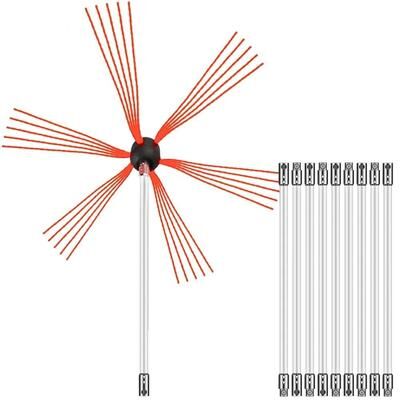
Multicon Wholesale Hub Chimney Sweep Kit Professional Chimney Cleaning Brush Set For Homeowners & Professionals Chimney Sweep Kit Professional Chimney Cleaning Brush Set For Homeowners & ProfessionalsLooking to keep your chimney clean and safe with minimal effort This 23FT(276in)approx Chimney Sweep Kit is your solution! Designed for both DIY homeowners and chimney maintenance professionals, this comprehensive cleaning kit offers a simple and...99,97 $*Shipping: 0,00 $Secure redirect to the provider
-
Tools, Home & Hobby 30 Ft Chimney Sweep Kit With Flexible Nylon Rods And 360 Chimney Cleaning Brush 30 Ft Chimney Sweep Kit With Flexible Nylon Rods And 360 Chimney Cleaning BrushExperience a cleaner, safer fireplace without the expense of frequent professional maintenance. This chimney cleaning brush kit is designed for homeowners who want an efficient way to remove soot and creosote while helping improve fireplace...119,97 $*Shipping: 0,00 $Secure redirect to the provider
-
Tools, Home & Hobby 39 Ft Rotary Chimney Sweep Kit With Flexible Nylon Rods & 360 Chimney Cleaning Brush 39 Ft Rotary Chimney Sweep Kit With Flexible Nylon Rods & 360 Chimney Cleaning BrushKeep your fireplace performing at its best with this chimney sweep kit designed to make routine maintenance faster, safer, and more effective. Whether you're a homeowner, cabin owner, or DIY enthusiast, this rotary chimney cleaning kit removes...119,97 $*Shipping: 0,00 $Secure redirect to the provider
-
Tools, Home & Hobby 26FT Chimney Sweep Kit With Rotary Chimney Brush & Flexible Nylon Rods For Fireplace Cleaning 26FT Chimney Sweep Kit With Rotary Chimney Brush & Flexible Nylon Rods For Fireplace CleaningKeep your fireplace burning cleaner, safer, and more efficiently with this chimney sweep kit designed for hasslefree home maintenance. Whether you're a homeowner, cabin owner, or wood stove enthusiast, this chimney cleaning kit helps remove soot and...124,97 $*Shipping: 0,00 $Secure redirect to the provider




-
What is a covalent bond?
A covalent bond is a type of chemical bond that involves the sharing of electron pairs between atoms. This sharing of electrons allows each atom to achieve a more stable electron configuration, typically by filling their outermost energy level. Covalent bonds are typically found in molecules and are stronger than other types of chemical bonds, such as ionic bonds. The number of shared electrons can vary, leading to different types of covalent bonds, such as single, double, or triple bonds. **
-
What is a non-covalent bond?
A non-covalent bond is a type of chemical bond that does not involve the sharing of electrons between atoms. Instead, non-covalent bonds are formed through electrostatic interactions, such as hydrogen bonding, van der Waals forces, and ion-dipole interactions. These bonds are generally weaker than covalent bonds and can be easily broken under certain conditions. **
-
What does "covalent" mean in chemistry?
In chemistry, "covalent" refers to a type of chemical bond that involves the sharing of electron pairs between atoms. This type of bond is formed between nonmetal atoms and is characterized by the atoms sharing electrons in order to achieve a stable electron configuration. Covalent bonds are typically strong and result in the formation of molecules. **
-
Is covalent bonding a difficult topic?
Covalent bonding can be a challenging topic for some students due to its abstract nature and the need to understand concepts such as electron sharing and molecular geometry. However, with proper explanation and practice, students can grasp the fundamentals of covalent bonding. It is important to break down the concepts into simpler parts and provide real-world examples to help students understand the concept better. With patience and practice, students can overcome the difficulties associated with covalent bonding. **


What is a nonpolar covalent bond?
A nonpolar covalent bond is a type of chemical bond where two atoms share electrons equally. This occurs when the difference in electronegativity between the two atoms is very small or nonexistent. As a result, there is no separation of charge within the bond, making it nonpolar. Nonpolar covalent bonds are typically found between atoms of the same element or between atoms with similar electronegativities. **
Can you explain the covalent bond?
A covalent bond is a type of chemical bond that involves the sharing of electron pairs between atoms. This sharing of electrons allows each atom to achieve a full outer electron shell, making the atoms more stable. Covalent bonds are typically formed between nonmetal atoms, and the strength of the bond is determined by the number of shared electrons and the distance between the nuclei of the atoms. Covalent bonds can be either polar or nonpolar, depending on the electronegativity difference between the atoms involved. **
Top-Angebote
Products related to Covalent:
-
Tools, Home & Hobby Chimney Sweep Kit 30 Ft Chimney Cleaning Kit With Flexible Rods, Chimney Brush & Safety Goggles Chimney Sweep Kit 30 Ft Chimney Cleaning Kit With Flexible Rods, Chimney Brush & Safety GogglesExperience a cleaner, safer fireplace without the hassle or expense of professional cleaning. This chimney cleaning kit is designed for homeowners who want an efficient way to remove soot, creosote, and debris while helping improve fireplace...139,97 $*Shipping: 0,00 $Secure redirect to the provider
-
Tools, Home & Hobby Chimney Sweep Kit 33FT Flexible Chimney Cleaning Kit With Drill Powered Chimney Brush Chimney Sweep Kit 33FT Flexible Chimney Cleaning Kit With Drill Powered Chimney BrushA clean chimney means a safer, warmer home and greater peace of mind every time you light a fire. This chimney cleaning kit is designed for homeowners, wood stove users, and fireplace owners who want an easier way to remove soot and creosote buildup...149,97 $*Shipping: 0,00 $Secure redirect to the provider
-
Multicon Wholesale Hub Chimney Sweep Kit Professional Chimney Cleaning Brush Set For Homeowners & Professionals Chimney Sweep Kit Professional Chimney Cleaning Brush Set For Homeowners & ProfessionalsLooking to keep your chimney clean and safe with minimal effort This 23FT(276in)approx Chimney Sweep Kit is your solution! Designed for both DIY homeowners and chimney maintenance professionals, this comprehensive cleaning kit offers a simple and...99,97 $*Shipping: 0,00 $Secure redirect to the provider
-
Tools, Home & Hobby 30 Ft Chimney Sweep Kit With Flexible Nylon Rods And 360 Chimney Cleaning Brush 30 Ft Chimney Sweep Kit With Flexible Nylon Rods And 360 Chimney Cleaning BrushExperience a cleaner, safer fireplace without the expense of frequent professional maintenance. This chimney cleaning brush kit is designed for homeowners who want an efficient way to remove soot and creosote while helping improve fireplace...119,97 $*Shipping: 0,00 $Secure redirect to the provider
-
What is covalent development?
Covalent development is a term used in the context of software development to describe a collaborative approach to building and maintaining software. It involves multiple developers working together on the same codebase, using version control systems to manage changes and updates. Covalent development emphasizes communication, teamwork, and shared responsibility for the code, leading to a more efficient and cohesive development process. This approach allows for greater flexibility and adaptability in responding to changes and challenges in the development process. **
-
What are covalent bonds?
Covalent bonds are a type of chemical bond formed between two atoms when they share one or more pairs of electrons. This sharing of electrons allows both atoms to achieve a more stable electron configuration, typically by filling their outermost energy levels. Covalent bonds are typically found in molecules and are responsible for holding the atoms together to form the structure of the molecule. These bonds can be either polar, where the shared electrons are not equally distributed between the atoms, or nonpolar, where the shared electrons are equally distributed. **
-
What is a covalent bond?
A covalent bond is a type of chemical bond that involves the sharing of electron pairs between atoms. This sharing of electrons allows each atom to achieve a more stable electron configuration, typically by filling their outermost energy level. Covalent bonds are typically found in molecules and are stronger than other types of chemical bonds, such as ionic bonds. The number of shared electrons can vary, leading to different types of covalent bonds, such as single, double, or triple bonds. **
-
What is a non-covalent bond?
A non-covalent bond is a type of chemical bond that does not involve the sharing of electrons between atoms. Instead, non-covalent bonds are formed through electrostatic interactions, such as hydrogen bonding, van der Waals forces, and ion-dipole interactions. These bonds are generally weaker than covalent bonds and can be easily broken under certain conditions. **
Similar search terms for Covalent
-
Tools, Home & Hobby 39 Ft Rotary Chimney Sweep Kit With Flexible Nylon Rods & 360 Chimney Cleaning Brush 39 Ft Rotary Chimney Sweep Kit With Flexible Nylon Rods & 360 Chimney Cleaning BrushKeep your fireplace performing at its best with this chimney sweep kit designed to make routine maintenance faster, safer, and more effective. Whether you're a homeowner, cabin owner, or DIY enthusiast, this rotary chimney cleaning kit removes...119,97 $*Shipping: 0,00 $Secure redirect to the provider
-
Tools, Home & Hobby 26FT Chimney Sweep Kit With Rotary Chimney Brush & Flexible Nylon Rods For Fireplace Cleaning 26FT Chimney Sweep Kit With Rotary Chimney Brush & Flexible Nylon Rods For Fireplace CleaningKeep your fireplace burning cleaner, safer, and more efficiently with this chimney sweep kit designed for hasslefree home maintenance. Whether you're a homeowner, cabin owner, or wood stove enthusiast, this chimney cleaning kit helps remove soot and...124,97 $*Shipping: 0,00 $Secure redirect to the provider
-
Tools, Home & Hobby Chimney Sweep Kit 20FT Rotary Chimney Cleaning Kit With Flexible Nylon Rods For Fireplace Flues Chimney Sweep Kit 20FT Rotary Chimney Cleaning Kit With Flexible Nylon Rods For Fireplace FluesClean your chimney with confidence and enjoy a safer, more efficient fireplace season. This chimney sweep kit is designed for homeowners, wood stove users, and DIY maintenance enthusiasts who want an easier way to remove soot and creosote without...109,97 $*Shipping: 0,00 $Secure redirect to the provider
-
Tools, Home & Hobby Chimney Sweep Kit 30 Ft Extendable Chimney Brush With Dual Heads For Safe Fireplace Cleaning Chimney Sweep Kit 30 Ft Extendable Chimney Brush With Dual Heads For Safe Fireplace CleaningKeep your fireplace performing at its best with a reliable cleaning solution that helps create a safer, warmer home. This chimney sweep kit is designed for homeowners, cabin owners, and DIY users who want an easy way to remove soot and creosote...147,97 $*Shipping: 0,00 $Secure redirect to the provider
-
What does "covalent" mean in chemistry?
In chemistry, "covalent" refers to a type of chemical bond that involves the sharing of electron pairs between atoms. This type of bond is formed between nonmetal atoms and is characterized by the atoms sharing electrons in order to achieve a stable electron configuration. Covalent bonds are typically strong and result in the formation of molecules. **
-
Is covalent bonding a difficult topic?
Covalent bonding can be a challenging topic for some students due to its abstract nature and the need to understand concepts such as electron sharing and molecular geometry. However, with proper explanation and practice, students can grasp the fundamentals of covalent bonding. It is important to break down the concepts into simpler parts and provide real-world examples to help students understand the concept better. With patience and practice, students can overcome the difficulties associated with covalent bonding. **
-
What is a nonpolar covalent bond?
A nonpolar covalent bond is a type of chemical bond where two atoms share electrons equally. This occurs when the difference in electronegativity between the two atoms is very small or nonexistent. As a result, there is no separation of charge within the bond, making it nonpolar. Nonpolar covalent bonds are typically found between atoms of the same element or between atoms with similar electronegativities. **
-
Can you explain the covalent bond?
A covalent bond is a type of chemical bond that involves the sharing of electron pairs between atoms. This sharing of electrons allows each atom to achieve a full outer electron shell, making the atoms more stable. Covalent bonds are typically formed between nonmetal atoms, and the strength of the bond is determined by the number of shared electrons and the distance between the nuclei of the atoms. Covalent bonds can be either polar or nonpolar, depending on the electronegativity difference between the atoms involved. **
* All prices are inclusive of VAT and, if applicable, plus shipping costs. The offer information is based on the details provided by the respective shop and is updated through automated processes. Real-time updates do not occur, so deviations can occur in individual cases. ** Note: Parts of this content were created by AI.