Buy schornsteinfeger.info ?
We are moving the project
schornsteinfeger.info .
Are you interested in purchasing the domain
schornsteinfeger.info ?
domain@kv-gmbh.de · 0541-91531010
Buy schornsteinfeger.info ?
How are derivatives related?
Derivatives are related in the sense that they are all based on the concept of the rate of change. For example, the derivative of a function represents the rate at which the function is changing at a given point. Additionally, different types of derivatives, such as options, futures, and swaps, are related in that they are all financial instruments whose values are derived from the value of an underlying asset or index. Overall, derivatives are related in their fundamental basis of measuring and capturing the rate of change in various contexts. **
What is meant by derivatives?
Derivatives are financial instruments whose value is derived from the value of an underlying asset, index, or rate. They can be used for hedging, speculation, or arbitrage purposes. Examples of derivatives include options, futures, forwards, and swaps. **

Similar search terms for Derivatives
Top-Angebote
Products related to Derivatives:
-
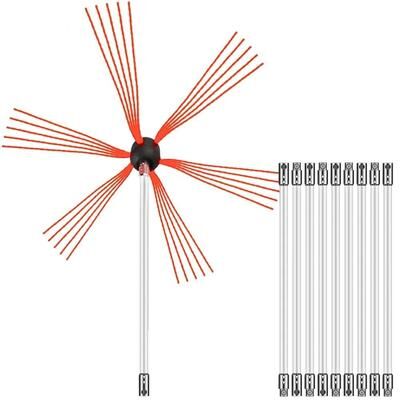
Multicon Wholesale Hub Chimney Sweep Kit Professional Chimney Cleaning Brush Set For Homeowners & Professionals Chimney Sweep Kit Professional Chimney Cleaning Brush Set For Homeowners & ProfessionalsLooking to keep your chimney clean and safe with minimal effort This 23FT(276in)approx Chimney Sweep Kit is your solution! Designed for both DIY homeowners and chimney maintenance professionals, this comprehensive cleaning kit offers a simple and...99,97 $*Shipping: 0,00 $Secure redirect to the provider
-
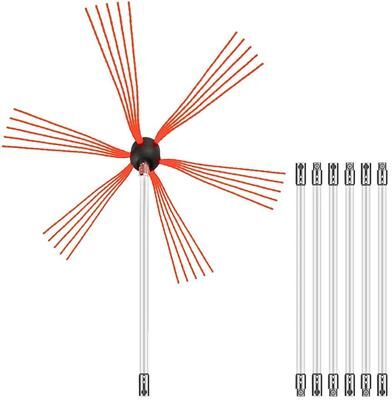
Tools, Home & Hobby 26FT Chimney Sweep Kit With Rotary Chimney Brush & Flexible Nylon Rods For Fireplace Cleaning 26FT Chimney Sweep Kit With Rotary Chimney Brush & Flexible Nylon Rods For Fireplace CleaningKeep your fireplace burning cleaner, safer, and more efficiently with this chimney sweep kit designed for hasslefree home maintenance. Whether you're a homeowner, cabin owner, or wood stove enthusiast, this chimney cleaning kit helps remove soot and...124,97 $*Shipping: 0,00 $Secure redirect to the provider
-
Tools, Home & Hobby 30 Ft Chimney Sweep Kit With Flexible Nylon Rods And 360 Chimney Cleaning Brush 30 Ft Chimney Sweep Kit With Flexible Nylon Rods And 360 Chimney Cleaning BrushExperience a cleaner, safer fireplace without the expense of frequent professional maintenance. This chimney cleaning brush kit is designed for homeowners who want an efficient way to remove soot and creosote while helping improve fireplace...119,97 $*Shipping: 0,00 $Secure redirect to the provider
-
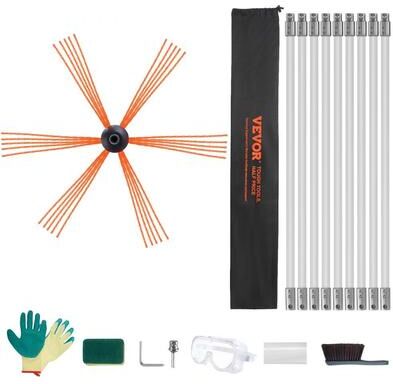
Tools, Home & Hobby 39 Ft Rotary Chimney Sweep Kit With Flexible Nylon Rods & 360 Chimney Cleaning Brush 39 Ft Rotary Chimney Sweep Kit With Flexible Nylon Rods & 360 Chimney Cleaning BrushKeep your fireplace performing at its best with this chimney sweep kit designed to make routine maintenance faster, safer, and more effective. Whether you're a homeowner, cabin owner, or DIY enthusiast, this rotary chimney cleaning kit removes...119,97 $*Shipping: 0,00 $Secure redirect to the provider


-
What are derivatives used for?
Derivatives are financial instruments that derive their value from an underlying asset, such as stocks, bonds, commodities, or currencies. They are used for various purposes, including hedging against price fluctuations, speculating on future price movements, and managing risk in investment portfolios. Derivatives can also be used to leverage investment positions, allowing investors to potentially amplify their returns. Overall, derivatives play a crucial role in financial markets by providing liquidity, price discovery, and risk management tools for investors and businesses. **
-
How can derivatives be formed?
Derivatives can be formed through a process called differentiation in calculus. This involves finding the rate of change of a function at a specific point. By taking the derivative of a function, we can determine how the function's value is changing with respect to its input. Derivatives can also be formed through rules and formulas that allow us to find the derivative of more complex functions. **
-
Are my graphical derivatives correct?
To determine if your graphical derivatives are correct, you should compare them to the analytical derivatives of the function you are working with. If the graphical derivatives match the analytical derivatives at various points on the graph, then they are likely correct. Additionally, you can also check for consistency in the slopes of the tangent lines at different points on the graph to verify the accuracy of your graphical derivatives. **
-
How do you determine derivatives?
To determine derivatives, you can use various methods such as the power rule, product rule, quotient rule, and chain rule. The power rule is used to find the derivative of functions raised to a power. The product rule is used to find the derivative of the product of two functions. The quotient rule is used to find the derivative of the quotient of two functions. The chain rule is used to find the derivative of composite functions. Additionally, you can also use the concept of limits to find the derivative of a function at a specific point. **


How can one assign derivatives?
One can assign derivatives by calculating the rate of change of a function with respect to its independent variable. This involves finding the limit of the difference quotient as the interval over which the change is measured approaches zero. The derivative represents the slope of the tangent line to the function at a specific point and can be used to analyze the behavior of the function at that point. Derivatives are fundamental in calculus and are used to solve various problems in mathematics, science, and engineering. **
What are derivatives of fractions?
The derivatives of fractions involve applying the quotient rule, which states that the derivative of a fraction is the derivative of the numerator times the denominator minus the numerator times the derivative of the denominator, all divided by the square of the denominator. In other words, to find the derivative of a fraction, we differentiate the top and bottom separately and then use the quotient rule to combine them. This allows us to find the rate of change of a fraction with respect to its variable. **
Top-Angebote
Products related to Derivatives:
-
Tools, Home & Hobby Chimney Sweep Kit 30 Ft Chimney Cleaning Kit With Flexible Rods, Chimney Brush & Safety Goggles Chimney Sweep Kit 30 Ft Chimney Cleaning Kit With Flexible Rods, Chimney Brush & Safety GogglesExperience a cleaner, safer fireplace without the hassle or expense of professional cleaning. This chimney cleaning kit is designed for homeowners who want an efficient way to remove soot, creosote, and debris while helping improve fireplace...139,97 $*Shipping: 0,00 $Secure redirect to the provider
-
Tools, Home & Hobby Chimney Sweep Kit 33FT Flexible Chimney Cleaning Kit With Drill Powered Chimney Brush Chimney Sweep Kit 33FT Flexible Chimney Cleaning Kit With Drill Powered Chimney BrushA clean chimney means a safer, warmer home and greater peace of mind every time you light a fire. This chimney cleaning kit is designed for homeowners, wood stove users, and fireplace owners who want an easier way to remove soot and creosote buildup...149,97 $*Shipping: 0,00 $Secure redirect to the provider
-
Multicon Wholesale Hub Chimney Sweep Kit Professional Chimney Cleaning Brush Set For Homeowners & Professionals Chimney Sweep Kit Professional Chimney Cleaning Brush Set For Homeowners & ProfessionalsLooking to keep your chimney clean and safe with minimal effort This 23FT(276in)approx Chimney Sweep Kit is your solution! Designed for both DIY homeowners and chimney maintenance professionals, this comprehensive cleaning kit offers a simple and...99,97 $*Shipping: 0,00 $Secure redirect to the provider
-
Tools, Home & Hobby 26FT Chimney Sweep Kit With Rotary Chimney Brush & Flexible Nylon Rods For Fireplace Cleaning 26FT Chimney Sweep Kit With Rotary Chimney Brush & Flexible Nylon Rods For Fireplace CleaningKeep your fireplace burning cleaner, safer, and more efficiently with this chimney sweep kit designed for hasslefree home maintenance. Whether you're a homeowner, cabin owner, or wood stove enthusiast, this chimney cleaning kit helps remove soot and...124,97 $*Shipping: 0,00 $Secure redirect to the provider
-
How are derivatives related?
Derivatives are related in the sense that they are all based on the concept of the rate of change. For example, the derivative of a function represents the rate at which the function is changing at a given point. Additionally, different types of derivatives, such as options, futures, and swaps, are related in that they are all financial instruments whose values are derived from the value of an underlying asset or index. Overall, derivatives are related in their fundamental basis of measuring and capturing the rate of change in various contexts. **
-
What is meant by derivatives?
Derivatives are financial instruments whose value is derived from the value of an underlying asset, index, or rate. They can be used for hedging, speculation, or arbitrage purposes. Examples of derivatives include options, futures, forwards, and swaps. **
-
What are derivatives used for?
Derivatives are financial instruments that derive their value from an underlying asset, such as stocks, bonds, commodities, or currencies. They are used for various purposes, including hedging against price fluctuations, speculating on future price movements, and managing risk in investment portfolios. Derivatives can also be used to leverage investment positions, allowing investors to potentially amplify their returns. Overall, derivatives play a crucial role in financial markets by providing liquidity, price discovery, and risk management tools for investors and businesses. **
-
How can derivatives be formed?
Derivatives can be formed through a process called differentiation in calculus. This involves finding the rate of change of a function at a specific point. By taking the derivative of a function, we can determine how the function's value is changing with respect to its input. Derivatives can also be formed through rules and formulas that allow us to find the derivative of more complex functions. **
Similar search terms for Derivatives
-
Tools, Home & Hobby 30 Ft Chimney Sweep Kit With Flexible Nylon Rods And 360 Chimney Cleaning Brush 30 Ft Chimney Sweep Kit With Flexible Nylon Rods And 360 Chimney Cleaning BrushExperience a cleaner, safer fireplace without the expense of frequent professional maintenance. This chimney cleaning brush kit is designed for homeowners who want an efficient way to remove soot and creosote while helping improve fireplace...119,97 $*Shipping: 0,00 $Secure redirect to the provider
-
Tools, Home & Hobby 39 Ft Rotary Chimney Sweep Kit With Flexible Nylon Rods & 360 Chimney Cleaning Brush 39 Ft Rotary Chimney Sweep Kit With Flexible Nylon Rods & 360 Chimney Cleaning BrushKeep your fireplace performing at its best with this chimney sweep kit designed to make routine maintenance faster, safer, and more effective. Whether you're a homeowner, cabin owner, or DIY enthusiast, this rotary chimney cleaning kit removes...119,97 $*Shipping: 0,00 $Secure redirect to the provider
-
Tools, Home & Hobby Chimney Sweep Kit 26FT Rotary Chimney Cleaning Kit With 8 Flexible Rods & 2 Brush Heads Chimney Sweep Kit 26FT Rotary Chimney Cleaning Kit With 8 Flexible Rods & 2 Brush HeadsA clean chimney means a safer, warmer, and more efficient fireplace every season. This Chimney sweep kit is designed for homeowners, cabin owners, and wood stove users who want an easier way to remove soot and creosote without climbing onto the...119,97 $*Shipping: 0,00 $Secure redirect to the provider
-
Tools, Home & Hobby Chimney Sweep Kit 30 Ft Extendable Chimney Brush With Dual Heads For Safe Fireplace Cleaning Chimney Sweep Kit 30 Ft Extendable Chimney Brush With Dual Heads For Safe Fireplace CleaningKeep your fireplace performing at its best with a reliable cleaning solution that helps create a safer, warmer home. This chimney sweep kit is designed for homeowners, cabin owners, and DIY users who want an easy way to remove soot and creosote...147,97 $*Shipping: 0,00 $Secure redirect to the provider
-
Are my graphical derivatives correct?
To determine if your graphical derivatives are correct, you should compare them to the analytical derivatives of the function you are working with. If the graphical derivatives match the analytical derivatives at various points on the graph, then they are likely correct. Additionally, you can also check for consistency in the slopes of the tangent lines at different points on the graph to verify the accuracy of your graphical derivatives. **
-
How do you determine derivatives?
To determine derivatives, you can use various methods such as the power rule, product rule, quotient rule, and chain rule. The power rule is used to find the derivative of functions raised to a power. The product rule is used to find the derivative of the product of two functions. The quotient rule is used to find the derivative of the quotient of two functions. The chain rule is used to find the derivative of composite functions. Additionally, you can also use the concept of limits to find the derivative of a function at a specific point. **
-
How can one assign derivatives?
One can assign derivatives by calculating the rate of change of a function with respect to its independent variable. This involves finding the limit of the difference quotient as the interval over which the change is measured approaches zero. The derivative represents the slope of the tangent line to the function at a specific point and can be used to analyze the behavior of the function at that point. Derivatives are fundamental in calculus and are used to solve various problems in mathematics, science, and engineering. **
-
What are derivatives of fractions?
The derivatives of fractions involve applying the quotient rule, which states that the derivative of a fraction is the derivative of the numerator times the denominator minus the numerator times the derivative of the denominator, all divided by the square of the denominator. In other words, to find the derivative of a fraction, we differentiate the top and bottom separately and then use the quotient rule to combine them. This allows us to find the rate of change of a fraction with respect to its variable. **
* All prices are inclusive of VAT and, if applicable, plus shipping costs. The offer information is based on the details provided by the respective shop and is updated through automated processes. Real-time updates do not occur, so deviations can occur in individual cases. ** Note: Parts of this content were created by AI.